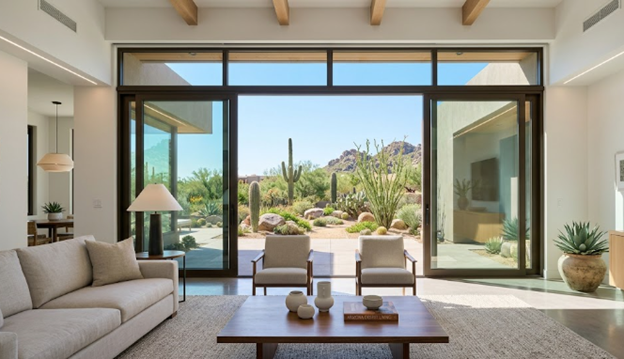
Let me ask you something simple.
When was the last time you stood near your window on a hot Arizona afternoon and actually felt comfortable?
If you had to think about it for even a second, there’s a good chance your windows aren’t doing their job. Older windows often let heat pour in, allow cool air to escape, and quietly push your energy bills higher month after month without most homeowners even realizing what’s causing it.
That’s exactly why this guide exists. We’re going to break down everything you need to know about energy-efficient windows what they are, how they work, and why upgrading them could easily become one of the smartest investments you make for your home this year.
What are energy-efficient windows, exactly?
Energy-efficient windows are designed to reduce how quickly heat moves in and out of your home. In simple terms, they help keep the indoor temperature stable no matter what’s happening outside.
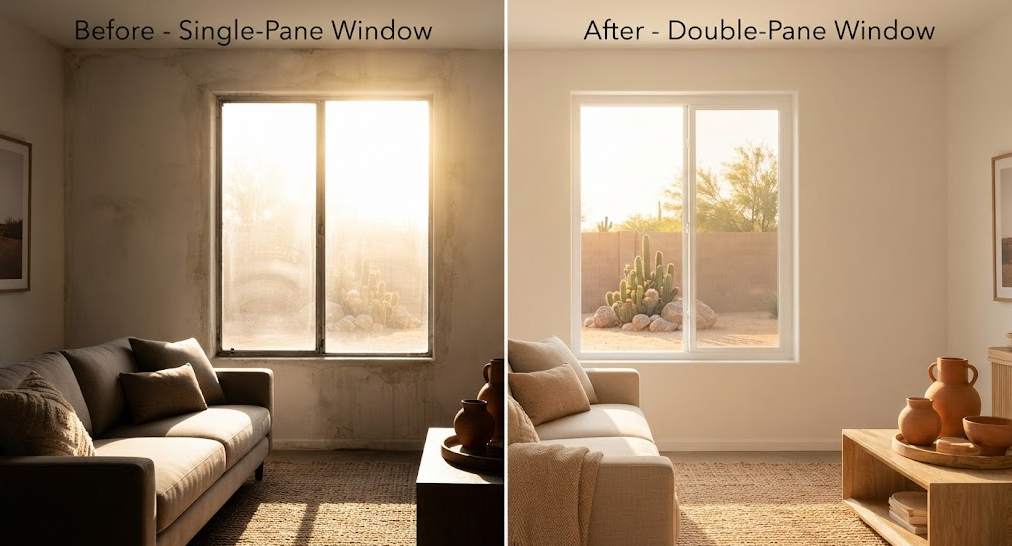
Traditional windows, especially older single-pane ones, don’t offer much protection. They’re basically just a single layer of glass, which means heat can pass through them easily. In hot places like Arizona, it turns your home into a heat trap during summer, forcing your air conditioner to work overtime just to keep things comfortable.
Modern energy-efficient windows for homes are built with advanced technology. They usually include multiple glass panes, insulating gas layers, and special low-emissivity coatings that help block unwanted heat transfer while still letting in natural light.
The outcome is noticeable: your home stays cooler in the summer, warmer in the winter, and your monthly energy bills become significantly more manageable.
Double Pane Energy-Efficient Windows: The Baseline Upgrade
If your home still has single-pane windows, double-pane energy-efficient windows are the first step up, and the difference is significant.
Instead of one layer of glass, you get two. Between those two panes sits a layer of argon or krypton gas. These gases are denser than regular air, which means heat moves through them much more slowly.
For Arizona homeowners, this matters a lot. Direct sun hits your home hard from spring through fall. A double-pane window slows that heat down before it ever reaches your interior. Your rooms stay cooler without your AC working itself to death.
Double-pane windows also reduce condensation and eliminate most of that ‘cold glass’ feeling on winter nights, which, yes, Arizona does get.
Low-E Glass Windows: The Smart Upgrade
Here’s where things get really interesting.
Low-E glass windows have a microscopic metallic coating applied to the glass surface. You can’t see it with the naked eye, but it changes everything about how your window handles sunlight.
Standard glass lets infrared heat (the kind that warms things up) pass straight through. Low-E coating reflects that infrared heat back outside in summer and back inside in winter.
So, you still get all the natural light you want. Your rooms stay bright and open. But the heat that normally comes with that sunlight gets blocked before it enters your home.
For west-facing and south-facing rooms in Arizona, the ones that get hammered by afternoon sun, low-E glass windows are genuinely a game-changer. Rooms that used to be unbearable in the afternoon become comfortable again.
Insulated Glass Windows Built for Extreme Climates
Insulated glass windows take the double-pane concept a step further.
Also called IGUs (insulated glass units), these windows seal the gas layer between panes so tightly that outside temperatures have almost no impact on your indoor air. They’re engineered for climates with extreme temperature swings, which, if you’ve lived through an Arizona summer into a cool winter night, you know, describes us perfectly.
The home window insulation solutions that insulated glass provides go beyond just temperature. They also help reduce UV damage to your furniture, flooring, and artwork. That fading on your couch near the window? That’s UV light coming through old, unprotected glass. Insulated windows block most of it.
What Makes the Best Energy-Efficient Windows?
Not all energy-efficient windows are created equal. Here’s what to look for when shopping for an energy-efficient window replacement:
- U-Factor Measures how well the window prevents heat from escaping. Lower is better. Look for 0.30 or below for Arizona homes.
- Solar Heat Gain Coefficient (SHGC): How much solar heat the window lets in. In Arizona, aim for 0.25 or below.
- ENERGY STAR Certification: Independently tested quality mark. The easiest way to confirm you’re getting a proper product.
- Frame Material: Vinyl and fiberglass frames insulate better than aluminum. In Arizona’s UV-heavy environment, they also hold up far longer without fading or warping.
How Much Can You Actually Save?
Real numbers vary by home, but here’s a general picture.
The U.S. Department of Energy estimates that heat gain and loss through windows account for 25 to 30 percent of residential heating and cooling costs. That’s a big slice of your monthly bill.
Homeowners who switch to energy-saving windows for home use in hot climates like Arizona often report monthly savings of $20 to $50 or more, depending on their home size, current window condition, and the type of upgrade they choose. Over five or ten years, that adds up to real money.
Is a Window Insulation Upgrade Right for You?
Here are a few honest signs it’s time to look into energy-efficient window replacement:
- Your energy bills have been creeping up with no clear reason
- Certain rooms feel much hotter or colder than the rest of the house
- You can feel air coming in around your window frames
- Your windows fog up between the panes (that means the seal is broken)
- Your windows are more than 15 years old
If two or more of those sound familiar, a window upgrade is worth seriously considering, not just for comfort, but for your wallet too.
Why Arizona Homeowners Trust Apex Legacy Windows
At Apex Legacy Windows, we specialize in residential window replacement across Litchfield Park, Phoenix, Scottsdale, and surrounding Arizona communities.
Every window we install is selected for Arizona’s specific climate: the heat, the UV exposure, the monsoon moisture, all of it. We don’t do one-size-fits-all. We do what’s right for your home.
Our installations come with industry-leading warranties, and our team is fully licensed and insured. We’ve helped hundreds of Arizona homeowners make the switch to better, smarter windows, and we’d love to help you too.
Ready to find out what the right windows could do for your home? Call (480) 521-9801 or contact now for a FREE estimate. No pressure, no pushy sales, just honest advice.