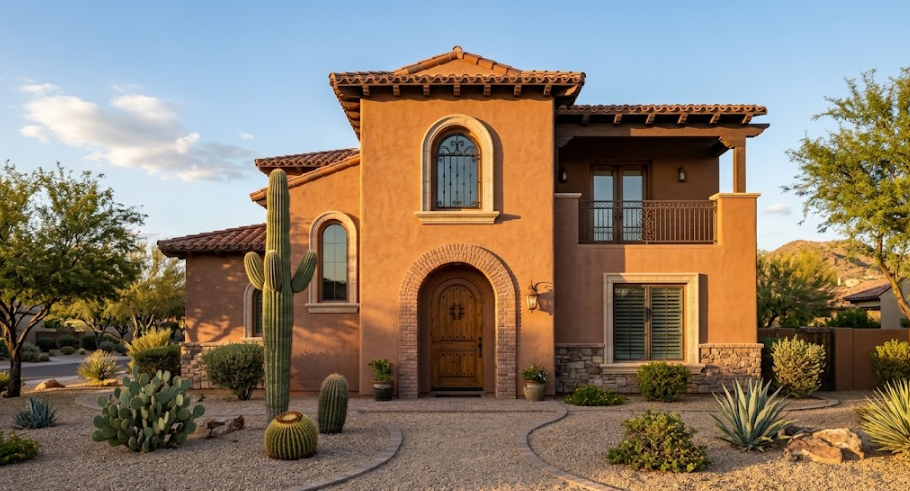
Not every window on a house needs to be a rectangle. Walk through neighborhoods in Litchfield Park, AZ, and you’ll spot arched entryways, round accent windows over garages, and bay windows tucked into dining rooms. These are specialty shape windows, and they’re one of the easiest ways to give a plain Arizona home some real character.
For homeowners planning a larger upgrade, our window replacement services can help improve both the appearance and performance of existing windows.
Specialty shape windows include arches, circles, half-moons, and bay or bow windows, built to fit non-standard openings. They typically cost more than standard rectangular windows due to custom framing and glass cutting, but they add architectural value and natural light that standard shapes can’t match.
What Are Specialty Shape Windows?
Specialty shape windows are custom-built windows made for openings that aren’t a standard rectangle. They’re often used as accent pieces rather than the main source of ventilation.
Common types include:
- Arched windows – Curved at the top, often placed above doors or entryways
- Circle and oval windows – Fully round or oval-shaped, common as accent pieces
- Half-moon windows – A half-circle shape, often paired above a rectangular window
- Bay windows – Three windows angled outward from the wall, creating extra interior space
- Bow windows – Similar to bay windows but with a gentler, curved arrangement
Most specialty shapes are fixed, meaning they don’t open. Bay and bow windows are the exception, since they usually include operable side panels.
Why Do Arizona Homeowners Choose Specialty Shapes?
Specialty shape windows add architectural interest that standard windows simply can’t. They’re often used to highlight a home’s entryway, staircase, or living area.
In Litchfield Park and nearby communities like Goodyear and Avondale, Southwest and Spanish-style architecture often includes arched details already. A matching arched window ties the whole exterior together instead of looking out of place.
They also work well in homes with high ceilings, where a plain rectangular window can look small and out of proportion. For homeowners looking for unique designs tailored to their home’s architecture, custom window solutions can provide more flexibility than standard window options.
How Much Do Specialty Shape Windows Cost?
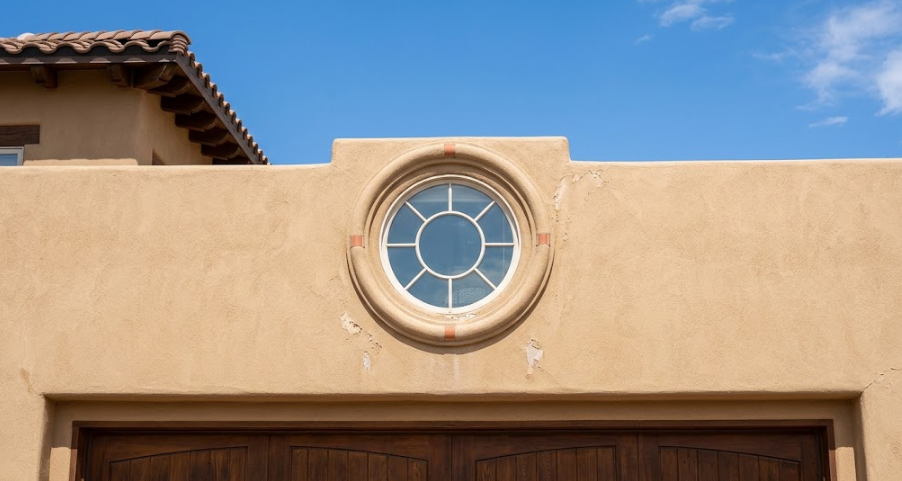
Specialty shape windows typically cost more than standard rectangular windows because of custom glass cutting and framing. Bay and bow windows tend to sit at the higher end due to added structural support and multiple panes.
Factors that affect price:
- Shape complexity (a full circle costs more than a simple half-moon)
- Glass type and coatings, like Low-E for heat control
- Frame material, such as vinyl or fiberglass
- Structural work needed for bay or bow installations
- Whether the window is fixed or operable
An in-home consultation is the best way to get an accurate number, since custom shapes vary a lot in complexity.
When Should You Consider a Bay or Bow Window?
Bay and bow windows work best in dining rooms, living rooms, or breakfast nooks where extra interior space and natural light make a real difference. They create a small ledge area, often used as a reading nook or plant shelf.
They’re not usually the right fit for small rooms, since the added depth needs enough exterior wall space to work with.
Comparison: Specialty Shapes vs. Standard Windows
| Feature | Specialty Shape Windows | Standard Rectangular Windows |
| Upfront cost | Higher | Lower |
| Architectural impact | High | Standard |
| Ventilation | Often fixed, limited | Fully operable |
| Installation complexity | Higher | Lower |
| Best use | Accent or focal points | Whole-home replacement |
Benefits of Specialty Shape Windows
- Adds curb appeal and architectural detail
- Brings in extra natural light
- Complements Southwest and Spanish-style homes
- Bay and bow options add usable interior space
- Can become a home’s standout feature
Common Mistakes Homeowners Make
- Choosing a shape that clashes with the home’s existing architecture
- Skipping Low-E glass, which matters more in fixed windows under direct sun
- Underestimating installation time for bay or bow windows
- Assuming all specialty shapes are operable
- Not checking structural support needs before installation
Who Needs Specialty Shape Windows?
Homeowners renovating a Spanish or Southwest-style home, or anyone wanting a stronger focal point on their exterior, benefits most from specialty shapes. New construction projects are also a natural fit, since framing can be planned around the shape from the start.
Who Doesn’t Need Them
If your main goal is maximum airflow and ventilation, standard operable windows are usually the better choice. Specialty shapes work best as accents, not as your only source of fresh air.
Best Practices for Specialty Shape Windows
- Match the window shape to your home’s existing architectural style
- Choose Low-E glass to manage Arizona’s strong afternoon sun
- Get a structural assessment before adding a bay or bow window
- Balance specialty windows with enough operable windows elsewhere in the home
Final Recommendation
Specialty shape windows are one of the most effective ways to add character to an Arizona home without a full remodel. Whether it’s a single arched accent above a doorway or a full bay window in the dining room, the right shape can transform how a home looks from the street.
If you’re curious whether a specialty shape fits your home’s layout, Apex Legacy Windows is happy to talk through the options with you, no pressure involved.