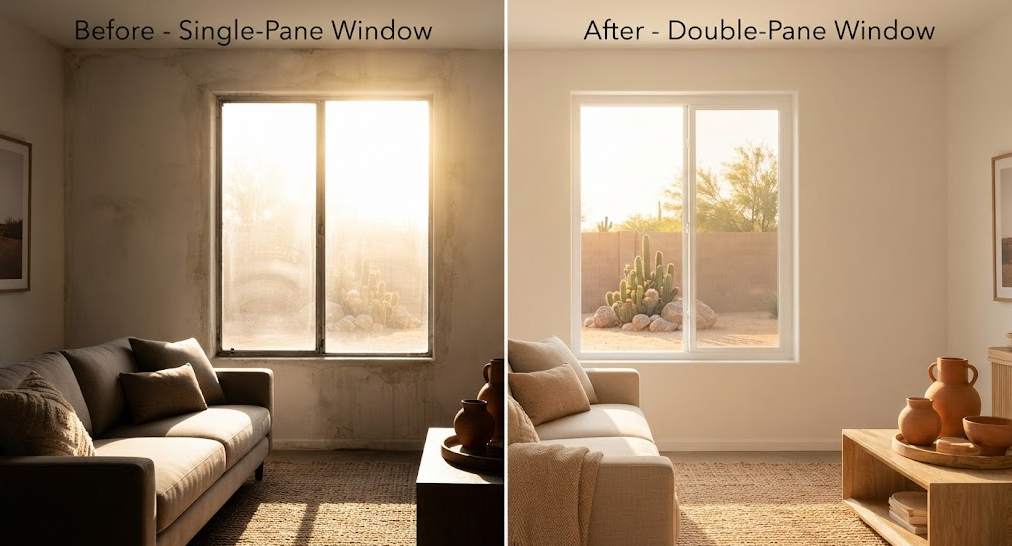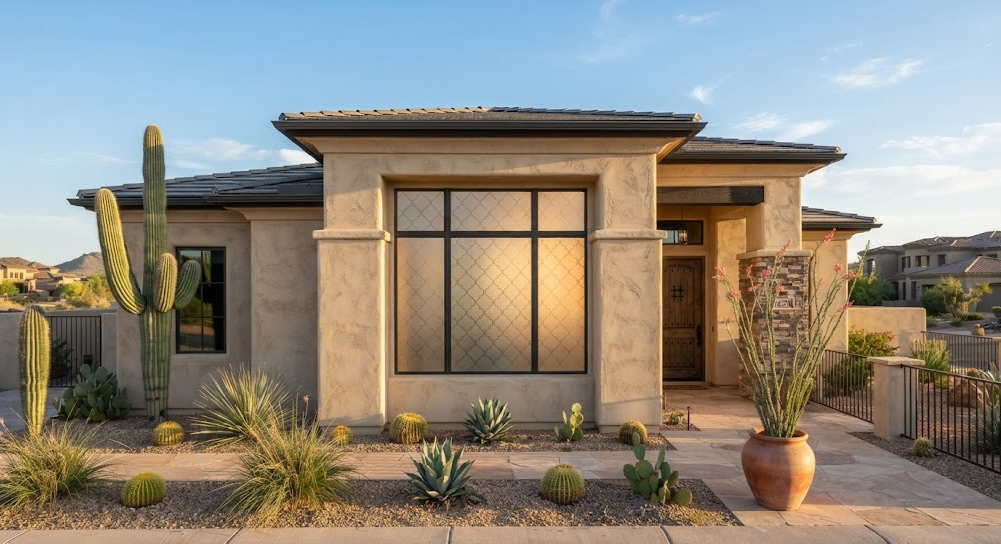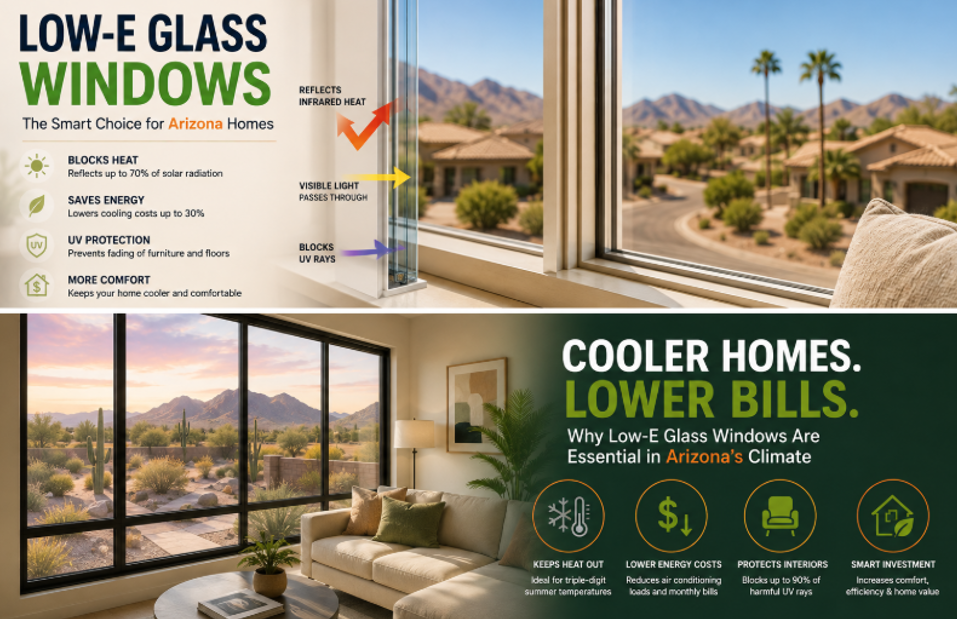
Low-E (low-emissivity) glass windows have a microscopic metallic coating that reflects infrared heat while letting natural light inside. In Litchfield Park and the West Valley, they keep extreme desert heat outside, lowering cooling costs by up to 30%.
Key Takeaways
- Blocks Heat: Reflects up to 70% of solar radiation.
- Saves Energy: Cuts summer air conditioning loads significantly.
- Protects Interiors: Stops UV rays from fading floors and furniture.
- Ideal for Arizona: Essential for handling triple-digit summer temperatures.
What Is Low-E Glass?
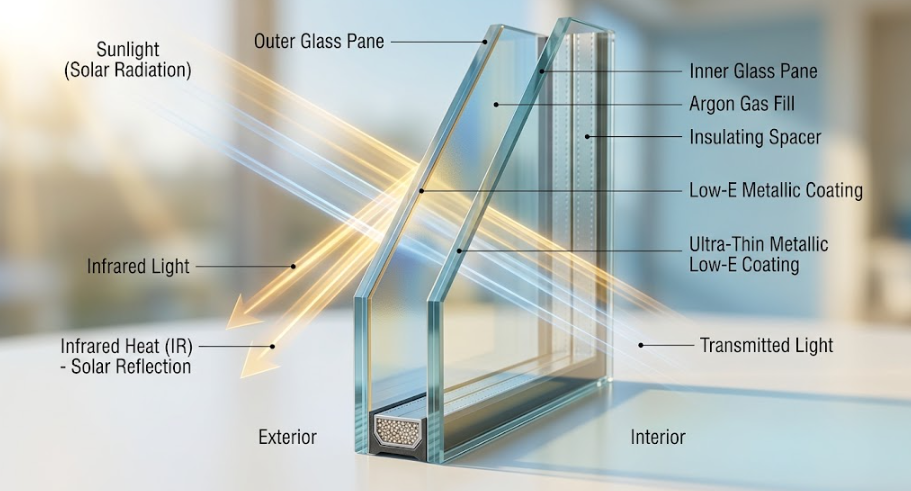
Low-E glass stands for low-emissivity glass. It features a microscopically thin layer of silver or metal oxide applied directly to the pane.
This coating reflects thermal radiation while allowing visible light to pass through. During Arizona summers, it prevents radiant sun heat from passing through your window frames into your living space.
How Low-E Glass Works
Standard glass absorbs heat and transfers it inside. Low-E coatings act like a mirror for thermal energy.
- Visible light passes right through, so your home stays bright.
- Infrared heat gets bounced back toward the outside.
- Ultraviolet (UV) light gets blocked, protecting carpets, paint, and furniture.
Why Low-E Glass Is Essential in Arizona’s Climate
Living in Litchfield Park, Goodyear, or Avondale means dealing with months of extreme solar exposure. Standard clear glass windows quickly turn room interiors hot, forcing your air conditioner to run constantly.
Low-E double-pane windows act as a thermal shield. They keep your indoor spaces comfortable even when outside temperatures exceed 110°F.
Benefits of Low-E Glass for West Valley Homeowners
- Lower Energy Bills: Reduces heat gain, taking stress off your HVAC system.
- Improved Home Comfort: Eliminates hot spots near western-facing windows.
- UV Protection: Preserves hardwood floors, leather couches, and window drapery.
- Better Resale Value: Homebuyers in the Phoenix metro area actively look for energy-efficient upgrades.
Low-E Glass Options Compared
Not all Low-E coatings perform the same way. In hot desert environments, selecting the right type makes a big difference.
| Coating Type | Best Climate | Visible Light | Heat Blocking (SHGC) |
| Passive Low-E (Hard Coat) | Cold Northern Climates | High | Low |
| Solar Control Low-E (Soft Coat) | Hot Desert Climates (AZ) | Medium-High | Very High |
| Triple-Pane Low-E | Extreme Weather Zones | Medium | Maximum |
For homes in Litchfield Park, Solar Control Low-E (Soft Coat) delivers the best balance of clarity and thermal performance.
Who Needs Low-E Glass Windows?
Who needs this:
- Homeowners in Litchfield Park, Surprise, or Buckeye facing high electric bills.
- Anyone with west- or south-facing windows receiving direct afternoon sun.
- Homeowners replacing old single-pane aluminum windows.
Who doesn’t need this:
- Properties in mild, overcast regions with minimal direct sun exposure.
- Shaded interior rooms without exterior glass exposure.
Step-by-Step Replacement Guide
Upgrading your home’s windows requires simple, structured planning:
- Energy Audit: Inspect your existing windows for air leaks, drafts, and seal failure.
- Glass Selection: Choose double-pane windows with low Solar Heat Gain Coefficient (SHGC) values.
- Professional Measurement: Ensure custom frames match your home’s exact openings.
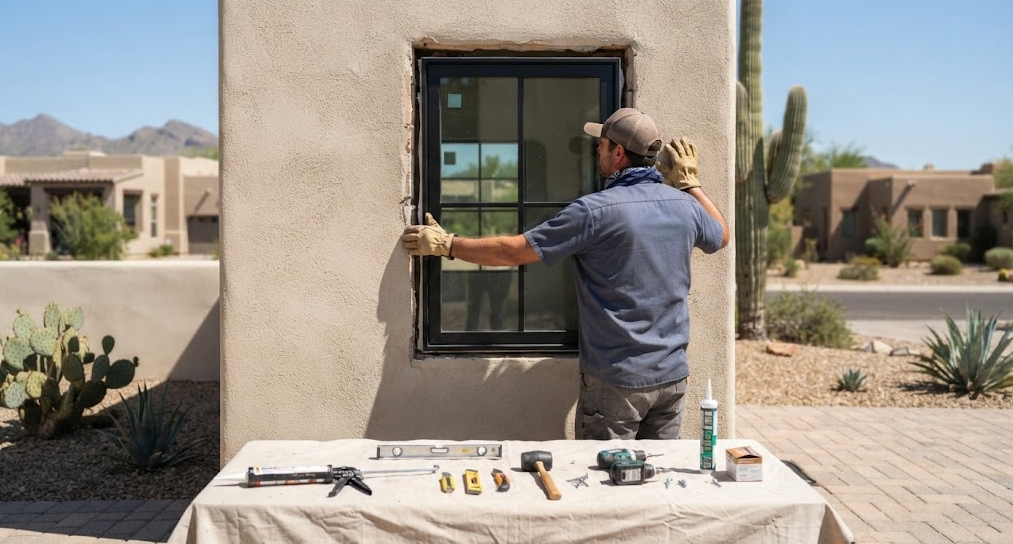
- Precision Installation: Seal frame perimeters properly to prevent thermal bridging.
- Quality Check: Verify smooth operation, tight latches, and clear glass views.
Common Mistakes to Avoid
- Choosing Passive Low-E: Buying window specs designed for northern heating climates instead of southern cooling climates.
- Ignoring SHGC Ratings: Focusing only on U-factor while ignoring the Solar Heat Gain Coefficient rating.
- DIY Installation: Improper sealing lets hot desert air leak around even high-end glass units.
- Replacing Only Some Panes: Upgrading just one window leaves thermal leaks across the rest of the facade.
Cost vs. Long-Term Value
While energy-efficient replacement windows require an upfront investment, they deliver strong return on investment in Arizona.
- Initial Cost: Typically ranges from $450 to $1,000+ per window installed, depending on size, frame materials (like vinyl or composite), and glass package.
- Energy Savings: Homeowners often see noticeable reductions on monthly summer cooling bills.
- Payback Period: Energy savings and reduced HVAC wear typically offset costs over time.
Final Recommendation
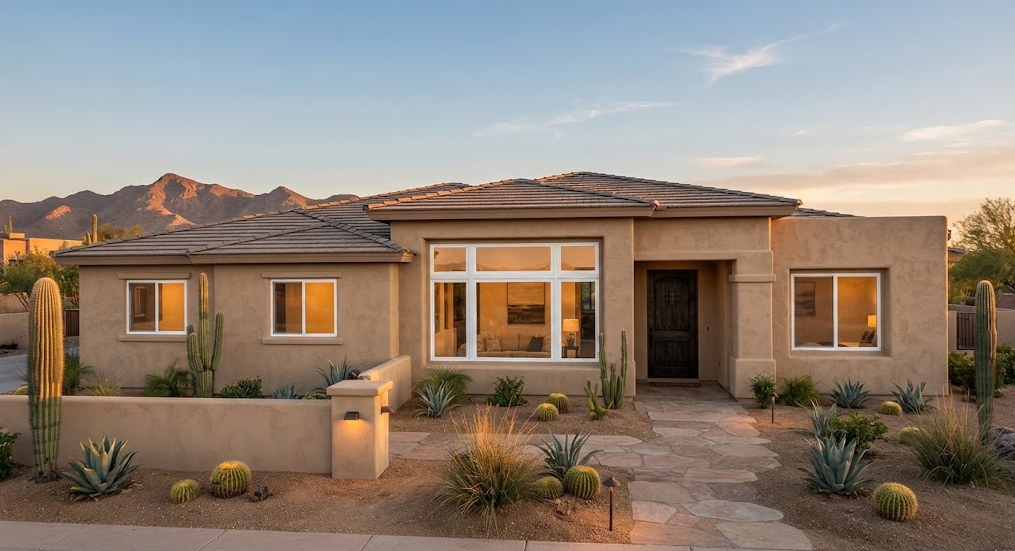
If your home stays hot during summer afternoons or your utility bills keep climbing, upgrading to Low-E glass windows is one of the smartest home improvements you can make in Litchfield Park.
For expert advice tailored to your home’s layout and budget, reach out to Apex Legacy Windows at apexlegacywindows.net for a friendly, no-pressure consultation.